
Installing a new tennis court is a significant investment that requires careful planning, expert knowledge, and the right materials. Artificial grass has become a popular choice due to its durability, aesthetic appeal, and all-weather usability. In this guide, we explore essential insights into tennis court installation, with a specific focus on artificial grass tennis courts. From surface selection to drainage preparation and long-term maintenance considerations, understanding each step is crucial for achieving a professional-grade result.
Why Choose Artificial Grass for Tennis Courts?
Artificial grass tennis courts provide a consistent playing surface and are less dependent on weather conditions compared to natural grass or clay. They offer enhanced durability, reduced maintenance, and lower long-term costs. Artificial surfaces are especially ideal for private properties, clubs, schools, and leisure centres where year-round play is a priority.
In addition, artificial grass is suitable for various skill levels, offering a balanced mix of speed and cushioning. For those focused on tennis court maintenance and longevity, synthetic turf eliminates many of the problems associated with natural surfaces, such as waterlogging, mowing, and fertilisation.
Planning Your Tennis Court Installation
Before construction begins, it’s essential to carry out thorough site planning. Factors to consider include orientation, access, soil condition, and surrounding landscape. North-south alignment is recommended to reduce sun glare during play. Adequate spacing for fencing, run-off zones, and potential seating areas should also be included in your layout.
A professional site survey will help determine whether ground levelling, drainage modification, or vegetation removal is needed. These early decisions will influence the cost, timeline, and performance of the court.
Foundation and Drainage Considerations
A stable base is critical to the success of any tennis court installation. For artificial grass tennis courts, the sub-base typically consists of crushed stone or aggregate to ensure structural integrity and proper water drainage.
Effective drainage is essential. Without it, water pooling can occur, leading to premature wear, slippery surfaces, and costly tennis court repairs. Perimeter channels, sloped gradients, and geotextile membranes are commonly used to manage water runoff. Poor drainage is one of the leading causes of early tennis court resurfacing, so investing in the correct base design upfront is a smart decision.
Choosing the Right Artificial Grass Surface
There are multiple types of synthetic surfaces suitable for tennis court artificial grass installations. The two most common categories are:
- Sand-filled artificial grass: Offers firm playing conditions and is often used in multi-sport facilities. Suitable for clubs and schools.
- Sand-dressed artificial grass: Features shorter fibres and a more consistent ball bounce. Preferred for private or professional-level play.
The quality and brand of artificial grass will affect both performance and lifespan. Ensure the product is UV-stabilised, has a proper warranty, and is specifically manufactured for sports use. Consulting with tennis court installation professionals can help you choose a surface tailored to your location and usage requirements.
Installing the Surface
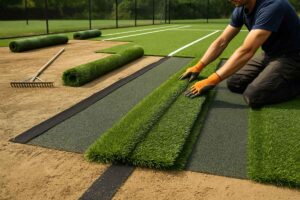
Once the base is prepared, the artificial grass surface is laid out, cut to size, and joined with seam tape and adhesive. It’s important that this stage is carried out by experienced installers to avoid wrinkling, loose edges, or uneven tension. The surface is then dressed with sand infill, which helps stabilise the turf and support the fibres.
Correct installation will prevent future problems such as seam separation, drainage failure, or infill migration. These issues can result in expensive tennis court repairs if not addressed early.
Line Marking and Finishing Touches
After the turf has been installed and filled, permanent line markings are added. These can be inlaid using white artificial grass strips or painted on with specialist coatings. Inlaid lines typically last longer and require less maintenance.
Other finishing touches may include perimeter fencing, LED court lighting, access gates, and windbreak netting. For those considering long-term savings, incorporating irrigation and low-voltage lighting systems during installation can reduce future upgrade costs.
Post-Installation Tennis Court Maintenance
Although artificial grass requires less upkeep than natural courts, ongoing tennis court maintenance is still essential. Brushing, infill levelling, and moss prevention should form part of your monthly routine. Occasional tennis court cleaning with specialist equipment will keep the surface looking sharp and performing consistently.
Maintenance not only ensures safety and aesthetics but also delays the need for tennis court resurfacing. With proper care, artificial grass tennis courts can last 10–15 years before requiring major renovations.
Common Installation Mistakes to Avoid
While many successful installations are completed every year, common errors can lead to substandard results. These include:
- Insufficient base preparation or compaction
- Poor drainage design leading to water pooling
- Incorrect seam alignment or adhesive failure
- Using non-specialist artificial grass unsuitable for sports
- Neglecting future tennis court maintenance planning
Choosing a reputable contractor with a track record of installing artificial grass tennis courts will greatly reduce these risks.
Budget and Timeline Expectations
Costs for a standard artificial grass tennis court vary depending on ground conditions, location, features, and contractor pricing. On average, a full-size installation in the UK ranges from £25,000 to £45,000. The full process typically takes 4–6 weeks from site preparation to completion, weather permitting.
Additional costs may arise from extras such as lighting, fencing, or complex groundwork. Including tennis court cleaning and maintenance in your annual budget will help protect this long-term investment.
Tennis court installation is more than just laying turf—it involves planning, drainage, precision, and long-term care. Artificial grass tennis courts are a practical and attractive solution for year-round play, but the success of the project hinges on proper execution and ongoing maintenance. From selecting the right surface to ensuring correct infill levels and drainage, every detail counts.
If you’re considering a new tennis court or upgrading an existing surface, make sure to work with experienced professionals and prioritise quality materials. With the right installation and a dedicated tennis court maintenance plan, your court will deliver exceptional performance and enjoyment for years to come.