
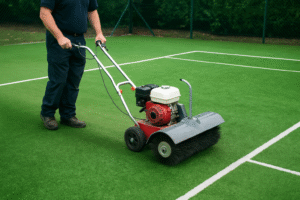
Proper surface brushing is a critical component of tennis court maintenance, especially for artificial grass courts. Brushing not only keeps the surface clean and free from debris, but also helps maintain the integrity of the synthetic fibres and the consistency of the infill. Whether you’re overseeing a tennis club, school court, or private installation, understanding how to brush your artificial grass tennis court correctly is key to extending its lifespan and ensuring peak performance.
Why Surface Brushing Matters
Regular surface brushing of artificial grass tennis courts serves multiple purposes. It lifts the fibres, redistributes the sand infill evenly, and helps prevent compaction that can lead to poor drainage or reduced playability. Tennis court maintenance that includes consistent brushing ensures the surface remains even, safe, and visually appealing throughout the year.
Over time, play and weather can cause the synthetic fibres to flatten, especially in high-use areas. This reduces ball bounce consistency and can cause premature wear. Additionally, infill displacement due to rain or movement can create uneven spots. Brushing helps restore the pile and redistribute infill to its intended depth.
When to Brush Your Tennis Court
As part of a broader tennis grass court maintenance plan, brushing should be performed weekly during periods of high use and at least monthly during quieter months. It’s also advisable to brush after heavy rainfall or wind events that may displace the infill or deposit debris onto the surface.
In commercial or club environments, daily brushing may be necessary to maintain optimal play conditions. For residential users, a weekly schedule is typically sufficient unless unusual wear or contamination occurs.
Types of Brushing Equipment
The choice of brushing equipment depends on the size of the court, usage level, and budget. Some of the most commonly used tools for tennis court cleaning and brushing include:
- Hand Brushes – Ideal for smaller courts or spot treatment, they allow for precision in high-traffic zones.
- Drag Brushes – Pulled manually or behind a machine, drag brushes are suitable for evenly covering larger areas.
- Power Brushes – Motorised units designed for deeper fibre lifting and infill redistribution. Best for professional tennis court maintenance.
Regardless of the type, it’s crucial to use equipment that is designed specifically for artificial grass to avoid damaging the turf or pulling seams apart.
Proper Brushing Technique
When brushing an artificial grass tennis court, always follow these best practices:
- Brush against the grain of the fibres to lift them effectively.
- Use a consistent pattern (e.g. crosshatch or circular) to ensure even infill distribution.
- Avoid brushing in wet conditions to prevent clumping of sand or infill.
- Do not use metal bristles or overly stiff brushes which may damage the turf backing.
For tennis court artificial grass surfaces, it’s particularly important to pay attention to service boxes, baselines, and other high-use areas where fibres flatten fastest.
Common Mistakes to Avoid
Poor brushing habits can do more harm than good. Avoid these frequent errors:
- Brushing too aggressively and causing infill displacement or seam lifting.
- Using the wrong type of brush for your artificial grass tennis court.
- Neglecting to brush regularly, allowing surface wear to accelerate.
- Failing to inspect the court before brushing for debris that could damage fibres.
Effective tennis court maintenance includes more than just brushing, but improper brushing can compromise the integrity of the entire surface and lead to expensive tennis court repairs or even early resurfacing.
Brushing and Infill Redistribution
Infill is vital to the performance of an artificial grass tennis court. It supports the turf fibres, provides shock absorption, and aids in drainage. Brushing works the sand or rubber infill back into areas where it has become depleted or migrated. This not only improves play quality but also stabilises the entire surface.
Courts with uneven infill levels often experience puddling, inconsistent ball bounce, and increased wear. As part of scheduled tennis court cleaning and maintenance, brushing ensures infill remains evenly spread and at the correct depth.
Integrating Brushing Into a Maintenance Schedule
Brushing should not occur in isolation. It is most effective when integrated into a full tennis court maintenance plan that also includes:
- Routine tennis court cleaning to remove leaves, debris, and algae
- Periodic moss and weed control treatments
- Surface inspections to identify signs of wear or damage
- Annual or biannual professional servicing for deep cleaning
By brushing your court as part of a holistic maintenance schedule, you reduce the frequency of tennis court repairs and can delay the need for tennis court resurfacing by years.
When to Call in the Professionals
For most facilities, brushing can be handled in-house with the right tools and training. However, if you notice that your efforts aren’t restoring the surface quality, it may be time to hire professionals. Contractors who specialise in tennis court installation and maintenance often offer brushing, infill top-up, and power sweeping as part of their service packages.
If your court has experienced heavy contamination, compaction, or flattening, mechanical brushing combined with deep tennis court cleaning may be required. This level of work should always be carried out by experienced technicians familiar with artificial grass tennis surface needs.
Surface brushing techniques are fundamental to the upkeep of any artificial grass tennis court. By lifting the fibres, maintaining even infill, and preventing premature wear, brushing enhances play quality, extends surface life, and preserves the aesthetics of your facility. When combined with routine tennis court cleaning and prompt tennis court repairs, brushing plays a crucial role in reducing the need for full tennis court resurfacing.
For those involved in tennis court installation, management, or long-term planning, brushing is not just a routine—it’s a strategic investment in performance, safety, and longevity.