
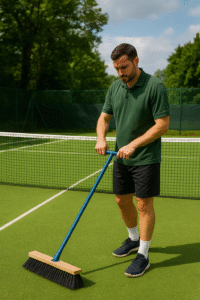
Tennis court maintenance is an essential part of preserving the quality, safety, and performance of any court surface. For those with artificial grass tennis courts, this responsibility is even more critical due to the specific nature of synthetic turf materials. Regular upkeep doesn’t just enhance playability—it protects your investment, extends the court’s lifespan, and ensures year-round usability. Whether you are a private homeowner, school, club, or sports facility, understanding the importance of tennis court maintenance is key to keeping your artificial surface in top condition.
Artificial Grass Tennis Court: Durable but Not Maintenance-Free
Many choose artificial grass for tennis court installation because of its all-weather usability, consistent performance, and low water needs. Unlike natural grass, synthetic turf doesn’t require mowing, fertilising, or regular watering. However, this doesn’t mean it’s maintenance-free. Artificial grass tennis courts are susceptible to surface contamination, infill displacement, and the gradual flattening of fibres over time. Without proper care, even the best installed court can suffer from drainage issues, algae growth, and loss of performance.
Preserving Performance and Safety
A well-maintained tennis court offers predictable ball bounce, consistent footing, and reduced risk of injury. Over time, debris like leaves, twigs, and soil can build up on the surface. If not removed, these contaminants trap moisture, encourage moss growth, and make the court slippery. Moss and algae growth is a leading cause of slip-related injuries, especially in shaded areas or after rainfall. Routine tennis court cleaning, including brushing and debris removal, helps prevent such hazards and keeps the surface safe for players of all ages.
Safety is paramount, especially for schools, clubs, and community venues. A proactive approach to tennis grass court maintenance helps facility managers meet duty-of-care obligations while minimising legal and insurance risks associated with unsafe playing conditions.
Protecting Long-Term Investment
Tennis court installation can be a significant investment, often ranging from several thousand to tens of thousands of pounds depending on size, location, and materials used. Artificial grass tennis surfaces typically last between 8 to 12 years when properly maintained. However, neglecting tennis court maintenance can shorten that lifespan by several years and lead to expensive restoration work.
Tennis court repairs, when carried out early, are generally minor. These may include fixing seams, reattaching loose lines, or topping up infill. Left unaddressed, these small issues can escalate, requiring partial or full tennis court resurfacing. This not only costs more but also results in longer downtime and disruption to play.
Preventing Drainage Problems
Artificial grass courts rely on a properly constructed sub-base and an effective drainage system. Over time, contaminants and compacted debris can block drainage channels, causing water to pool on the surface. Standing water not only prevents play but also promotes the growth of moss and algae, accelerating wear and increasing slip hazards. Regular brushing helps maintain the permeability of the surface and ensures the infill remains evenly distributed.
In more severe cases, tennis court cleaning with specialist equipment may be necessary to clear blocked drainage or restore the court’s base layer integrity. Preventative maintenance is always more affordable than emergency repairs or resurfacing caused by prolonged waterlogging.
Maintaining Appearance and Playability
The visual appearance of a tennis court plays an important role in user experience and satisfaction. A clean, vibrant, and well-kept artificial grass court conveys professionalism and pride in the facility. Neglected courts often suffer from discolouration, flattening, and algae staining, which not only affect aesthetics but also performance.
Brushing helps maintain the upright structure of the synthetic fibres, allowing for consistent ball bounce and traction. When fibres become flattened through high use or neglect, gameplay becomes unpredictable, and surface traction may diminish. Tennis grass court maintenance ensures the surface remains even, firm, and responsive to player movement.
Minimising the Need for Tennis Court Resurfacing
One of the most compelling reasons to invest in regular tennis court maintenance is to delay or reduce the need for resurfacing. Tennis court resurfacing is an intensive and costly process involving the removal of the old surface, possible base repairs, and the installation of a new synthetic turf system.
Routine care, including tennis court cleaning and early repairs, helps extend the life of the current surface. Addressing minor wear and tear before it becomes a structural issue reduces the chances of early resurfacing. In this way, maintenance becomes a money-saving strategy that prolongs usability while minimising capital expenditure.
Essential Elements of a Maintenance Schedule
A proactive maintenance plan should combine daily, weekly, monthly, and annual tasks. For artificial grass tennis courts, this often includes:
- Regular debris removal with a blower or soft brush
- Monthly power brushing to lift compacted fibres
- Infill level checks and top-ups as needed
- Seasonal moss and algae treatments
- Drainage inspections and cleaning
- Periodic professional tennis court cleaning and deep maintenance
- Surface inspections to identify tennis court repairs early
Consistency is key. Many court owners schedule seasonal visits from maintenance professionals to supplement in-house tasks. This is especially common before winter and at the beginning of the spring playing season.
DIY vs Professional Tennis Court Maintenance
While many aspects of tennis court maintenance can be handled in-house, such as brushing and basic cleaning, other tasks require professional intervention. For example, power brushing with specialist equipment and infill redistribution is best handled by experienced contractors. Similarly, drainage cleaning, line repairs, and surface reconditioning are more effective when carried out by trained specialists.
If you’re unsure when to call in a contractor, consider the court’s appearance, water drainage speed, and player feedback. Regular visual inspections combined with structured maintenance reports can help determine when professional services are necessary.
Case Studies: Maintenance in Action
Across the UK, countless facilities have benefited from routine tennis court maintenance. One private club in Surrey reported saving over £10,000 by maintaining their artificial grass tennis court with monthly brushing, biannual professional cleaning, and prompt surface repairs. As a result, they extended the life of their court by five years beyond the manufacturer’s estimate.
In contrast, a school in the Midlands had to undertake emergency tennis court resurfacing after three years of neglect, following issues with drainage, compacted moss, and lifting seams. The cost exceeded their original installation by 30%, illustrating the real-world benefits of preventative care.
Environmental and Player Benefits
Artificial grass surfaces are an environmentally conscious choice due to their low water consumption and reduced use of chemical treatments. However, proper tennis court maintenance enhances these eco-benefits by reducing waste (fewer court replacements), lowering chemical runoff through targeted treatments, and supporting more sustainable sports facility management.
For players, regular maintenance means a consistently enjoyable experience. They can count on safe footing, good bounce, and a surface that performs predictably across the year, regardless of rain or sun.
Conclusion: Make Maintenance a Priority
Tennis court maintenance isn’t a luxury—it’s a necessity. For artificial grass tennis courts, in particular, routine upkeep preserves safety, maximises performance, reduces long-term costs, and protects your investment. Whether you’re dealing with a private residential court or a multi-use public facility, the principles remain the same: clean regularly, inspect often, and act early on repairs.
Investing time and effort into tennis court maintenance today helps you avoid costly tennis court repairs or premature tennis court resurfacing tomorrow. Keep your court playable, safe, and visually appealing by making maintenance part of your court care strategy.